
Tech Enshittification: why you don't OWN any software

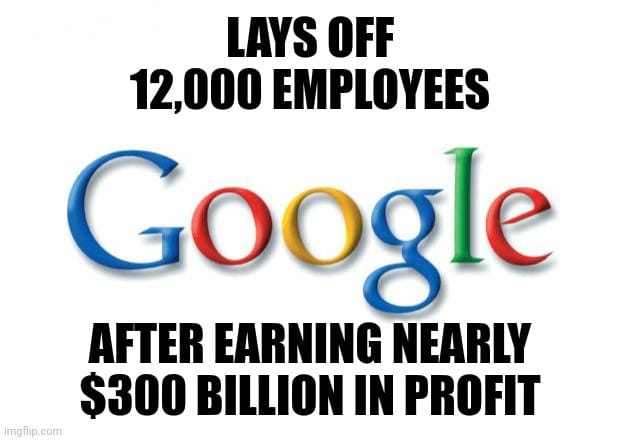
"You'll own nothing, and you'll be happy" -World Economic Forum (WEF)
It's 2008, and the big debate between digital artists & publishing houses is whether or not the upgrade from Adobe CS3 (Creative Suite) to CS4 is actually worth the investment.
This was a time where you could actually buy software outright and own it for life, even if certain licenses restricted you from receiving updates forever, it at least meant that if hell froze over, as long as you had that disc handy or a backup of it, then you could install & activate the software that you rightfully purchased with your hard-earned money.
However, there was a big elephant in the room that many would rather not address, let alone even 'acknowledge': the price was too damn high. Most people only bought the exact app they needed, and those who could invest more money into the entire Adobe suite were often agencies or companies where it made sense for them to just buy it all for their various departments as it was better value that way.
But for independents or smaller businesses that were just starting out, their options were limited: they usually bought just Photoshop standalone, but many had to obtain the software through questionable means or use inferior alternatives; this was at a time where options were scarce, and so Adobe could charge an arm and a leg since they basically controlled all of the digital publication/art industry in that sense.
Modern-day software
Fast-forward to today, and you'd be hard-pressed to find anyone actually owns any of the software they use daily, whether personally for home-use or professionally at work. Everything has been reduced to a monthly or (worse-yet) annual subscription - I say worse because the longer the term is, the more locked-in you are.
The way this was sold to the consuming masses was simple: "Why buy software, when you can just rent it and stop at anytime when you no longer need it. It's cheaper this way!"
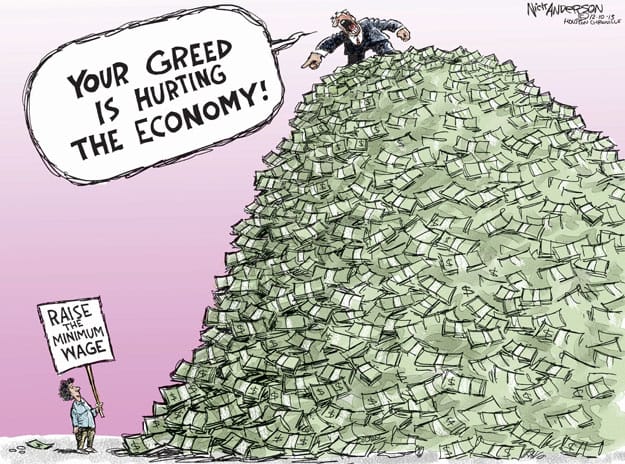
And surely this was cheaper for those wanting to trial the software or simply newbies who are still learning but can't afford to fork out thousands just to use a tool they might never touch again after a month or two. It helped new businesses get their foot in the door without risking a huge loss/write-off.
But is it really cheaper? All we've done here is we've chained ourselves to a product, relying on it for convenience or worse yet: our livelihood everyday, while reserving none of our rights to use it indefinitely.
What if the apps' servers went down overnight & you couldn't login to verify your membership? Worse yet, what if a permanent update was made that removed a feature you relied on for your work and now there's no way to go back, because you don't own any specific version of the app. Or worse yet... what if a software updated permanently rendered the hardware it runs on useless 😬
And when it comes to data ownership, SaaS (software as a service) products have made the water murkier than ever: most are run off huge data centres in the US, and many journalists & technologists have exposed the data-selling epidemic between large organizations many times in the past, and to-date.
But the worst part...? You keep paying forever, for nothing.
Let's look at a real-world example: in Australia, right now, I could subscribe to the entire 'Adobe Creative Suite' for only "AU$1,247.93/yr inclusive of GST". Now at the time of release for the final purchasable collection in 2013, you could buy Adobe's Creative Suite 6 Master Collection at a whopping AU$4,344.
If you're doing quick number crunching already, you've pieced together that after 4 years, you would have paid just about $5,000 while not getting any closer to owning these apps whatsoever, and you will continue paying that fee, till the end of time... 🫣
That means that if you're a creative who relies on these apps for their livelihood, and are likely to do so for the foreseeable future, then you are literally being robbed blind!
Since CS3, most professionals I've spoken to that use these apps consistently would tell you that all 'upgrades' since have been a money-grab. Once you've created a software tool that does something exceptionally well, it's hard to keep adding more value to the end-user without simply lying to them about capabilities or convincing them that they need the new-but-useless features in the latest version.
With subscriptions you don't even have to pretend that anything is new or upgraded, because people will just keep paying simply for access alone; so if anything... Adobe hasn't given users anything revolutionary for well over 10 years, yet is one of the biggest companies in the world still, and making more profit than ever.
All without having to actually 'research' or 'develop' any new solutions to people's problems.
Now that's just scratching the surface, there's a whole bunch of "fine-print" that I have skimmed over, so here's a summary:
- AU$4,344 for CS6 in Australia was actually deemed highway robbery still, headlines in 2013 would read: It's cheaper to fly to the USA than buy Adobe CS6 in Australia, and they were dead right! So keep that in mind, that even then it was still considered predatory pricing for the time, and yet it's still a better deal TODAY than paying endlessly.
- To make matters worse: if you chose to cancel your annual Adobe subscription after 6 months for example, you will get NO refunds for the remaining period of unuse... And if you choose the discounted monthly plan, and cancel after 14 days, you will also be charged a cancellation fee!
- For people who can't afford to fork out a whopping grand upfront, they are stuck paying for a monthly subscription of AU$169.99, but hey at least that comes with "no lock-ins" 🤡 Ye right... other than the fact that you're virtually never gonna leave once you get familiar with these apps' workflows.
I hope that puts matters into perspective, because no matter which way you spin it: paying for an app that should just be purchased outright is never going to be justifiable.
Is it fair to pay a subscription for ANY software?
You have to keep in mind that these apps do not actually require an active internet connection to function, unlike other SaaS apps that do because they need access to a data source constantly, such as serving content.
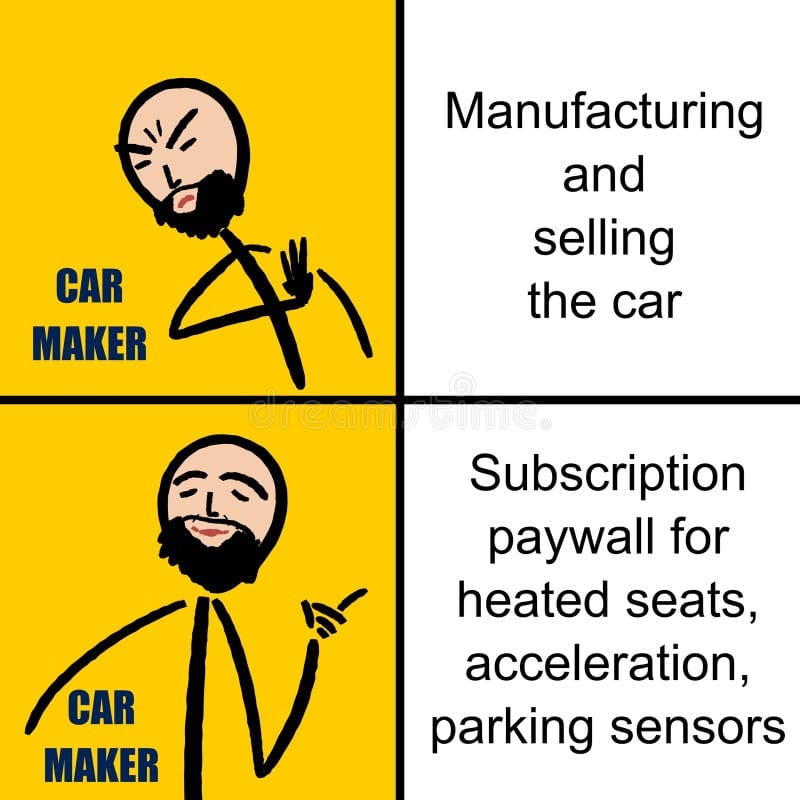
For example: Netflix can justify charging you a (formerly reasonable) monthly fee because they need to keep a server farm up & running 24/7, accessible globally with thousands of titles for you to watch. You can't just watch Netflix after installing the app with no internet (unless of course, you pre-download the title), so it's only fair for you to pay for the service, as they are actually giving you something more than just the 'software'.
But even then, many enthusiasts argue that it's better to purchase content you love as it supports the artists much more than they do by getting streaming royalties, which are just chips compared to how much these streaming platforms make off of their users directly.
And in Netflix's case, once they got their foot in the door, they have consistently offered nothing new feature-wise and just kept hiking prices. Worse yet: they have made account-sharing in very reasonable scenarios impossible; but it's MY account, I should be able to do whatever I want with it, no?
A great example of this, is a realm where there are many independent/up-and-coming artists: music. And when we talk about tunes, the first app guilty as charged that comes to mind is... Spotify!
Spotify has been under immense scrutiny through the years for the constantly rising subscription prices, yet lack of new features to actually justify it. What's worse is they are notorious for not paying artists enough for their work, where 'enough' is based on how much money they generate by having highly-liked & listened to independent artists on their platform.
Spotify is a great example of a SaaS platform that produces very little to no value of its own, yet makes billions every year off the back of hard-working creatives. The app is literally worth $0 without its content, the music is the only reason you subscribe.
And yet... If you woke up overnight and found half of your favourite artists have been censored, what would you do? How would you continue listening to the music you love?
Worse yet, Spotify's CEO has also been linked to investing in war weapons & genocide overseas, with some artists resorting to none other than pulling their music from the platform as a last-resort in an act of defiance against this system... hmm, it's not looking good here is it?
Recognising the toxic pattern
And so this is what we're called to do: recognise this toxic "big tech enshittification" pattern, because really, you can't fix that which you do not first see.
"Tech Enshittification" is a term which gained huge notoriety recently amongst the tech-savvy crowd. It simply represents the relentless need for new tech products to establish themselves in new markets that genuinely solve a problem, usually starting off free/very cheap and affordable for their users, and of actual help to them.
Over time, as more greedy investors come on board, the software startup's revenue figures are put under massive scrutiny, now that they've got a customer base that NEEDS their app, they no longer need to 'prove their worth' to their users, instead they need to prove they can make their investors the big bucks.
Very quickly, the startup becomes a 'scale-up' which is just a nicer word for "expand as fast as possible with ZERO care about workers' livelihoods or users' needs".
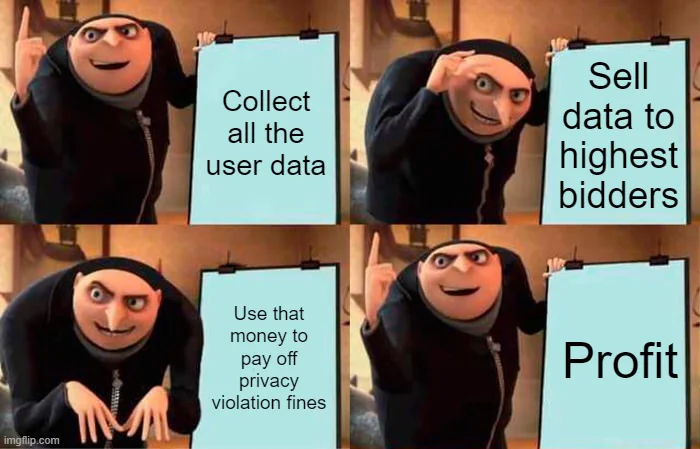
This is where you see subscription prices sky-rocket, acquisitions of big competitors take place & monopolies rise to take it all home, all at the cost of the user & general public.
The biggest realisation of this relentless pursuit of enshittification came to me when I was at A Cloud Guru (ACG), a renowned tech startup that vowed to "teach everyone how to cloud".
For most of my measly 11 months there, I firmly believed in that vision, but my reality came crumbling down as my team was tasked with price-matching subscription plans to that of our newly-acquired competitior's (Linux Academy).
Now, here's the thing, ACG sold a subscription which gave the user access to a big library of educational content on all matters "cloud computing" to help them get certified & secure a job in tech. But the real kicker is this: Linux Academy (whose price we were matching) boasted a larger collection of educational courses, which was also more technically in-depth.
So, in terms of being fair to the users and living up to the self-proclaimed title of "teaching the world to cloud", they failed the test.
I remember how betrayed I felt by the company's leadership at the time (yes, I "drank the Kool-Aid" so to speak), that I confided in a fellow Engineer, whom I revered then... only to realise that he was so far detached, saying and I quote "So what? It's just business".
If it was just business, then let's not pretend to be making the world a better place, lying, cheating & deceiving our way to the top, all the while doing so off the back of vulnerable people looking for a career change or their very first job.
Where to from here?
And so I left after only having been there for a little under a year, with a newfound understanding (or lack thereof, really) of what it means to "use tech for good". I was jaded, depressed and quite frankly hopeless.
This was a company I'd held in such high regard, and I thought to myself, if even this place could so easily go down the shitter due to greed, then nowhere in this world of startups was any place ever too 'sacred' to enshittify.
Endless subscriptions with no ownership of anything, data harvesting & selling to 3rd parties without your consent, and murky privacy & data ownership laws to keep you up at night; the truth was hidden in plain-sight, if we want big tech to do better, they simply never will... because monopoly cannot be held to account by the very systems that birthed it. 👁️
But... then the question that begs to be asked is: what is the solution to this enshittification?
And the answer, to be quite plain, is simple: YOU.
You, the user, have always been and will always be, the deciding factor; the sole power behind bringing rise to technology or being its downfall.
We are at a cross-roads in time now where if we don't start directing our attention & usage of technology towards those who are doing it for the good of the world, then it'll be to our detriment as a collective.
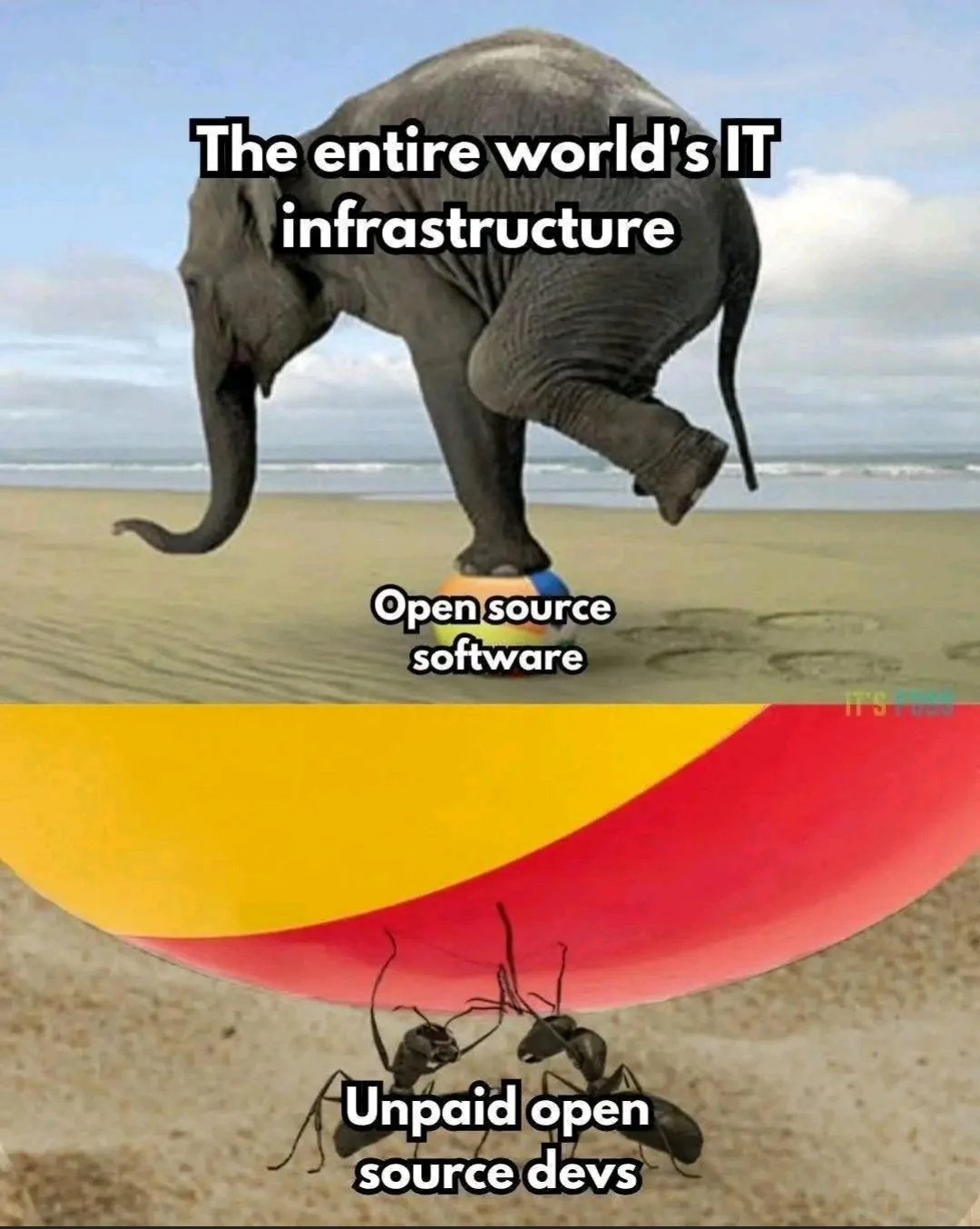
Libre/open-source software has existed for decades, and over the years we've seen the improvement of it to a point where the vast majority of big tech apps have very mature & well-maintained open-source alternatives that are community-driven.
The best part is tooling has become so good now, that it's relatively easy to self-host an open-source app on your own hardware or in your own private cloud with little cost/overhead, some tech-savvinness and a willingness to learn.
Not only does self-hosting your own apps give you full data sovereignty & transparency, it also frees you from the shackles of big tech's watchful eye & their endless subscriptions. ⛓️💥
You own your data and you do with it as you please, but more importantly: you are sending a big message to these companies that you simply won't use a product which puts profit above people.
So what will it be: will you continue paying for endless subscriptions, slowly giving away your rights day by day till everything has been commodified to filth in every aspect of life?
Or... will you join in me in saying "enough is enough", trying something new and doing things differently for a change?
Together, we can use tech for good. It's time we stopped big tech enshittification & started supporting grassroots community-driven software, built by the people, for the people.
If this sounds like music to your ears, then I urge you to join me, because together... we are better ❤️🔥